November 7, 1980
will you ever write a dirge for me?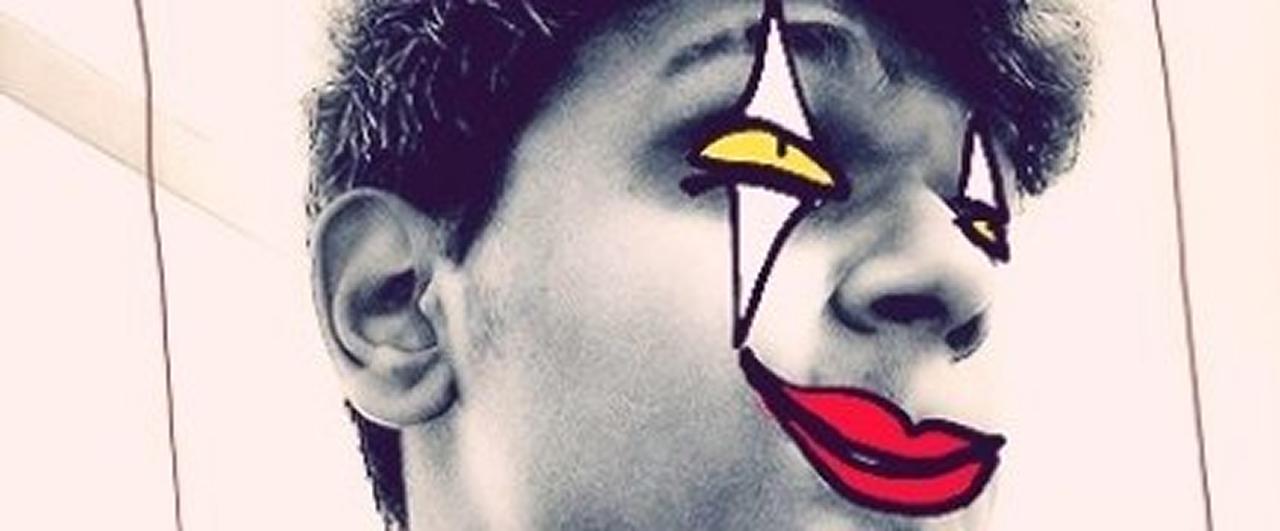 never cry, scream or get angry about it in the open
I gave my hand to Don, and we walked towards the centre of the stage. I stood there holding Don’s hand, looking at the crowd cheering and clapping like crazy. The claps wouldn’t stop for another two minutes.
The Vaudevillians and all the members of the show started walking off the stage. The public also began taking their leave.
I remember hearing kids telling their parents about how much fun they had. That they’d want to visit the same musical next year as well, and so many more stories.
I kept looking back at the public as they walked out of the huge tent. Don stopped, looked at me, and turned around to watch the people leave with me.
I looked back at Don and put forward my hand for the black rose. We walked to the centre of the stage and stood there for a while until the whole tent was empty.
I don’t really remember what happened after that, but I had joined “The Nocturnal Smiles”. I was mostly with Don and Emily Sharapova (the Queen and Don’s partner). The troupe was based in Leipzig, Germany. But Don stayed in Dresden for some reason. He took me with him to Dresden, and I think I stayed with him for quite a long time.
The troupe was quite large. A lot of character design and planning was done by Don himself. Emily handled styling and some of the female lead characters whenever needed in the Act. Screenwriting was done by Paul. Paul smelled of cigarettes and papers all the time. Gracie was the overall manager, and she was the oldest as far as I remember.
I trained with Don for a long time, doing acrobatics and learning gestures. One strange difference was that we worked on my acrobatics skills in a group. But the movement rehearsal was often just at home. I’d often study the way Don conveyed things without saying. I was also a good reader of body movements and gestures. There’s also a term called “emotional intelligence,”. I could tell how people were feeling before they said anything.
There was no other way for us to communicate with each other. I did not know his language, and he often had a very hard time understanding me. The dialects, style of writing, and everything were just too weird for both of us.
Emily was the nicest person in the troupe. Probably, she showed a lot of natural affection to me because of my age and the background I was from. She made sure no one was overworking me, bought chocolates and sweet wafers often. I don’t remember communicating much with others. Emily and Don were the only two people I was most in contact with. Oftentimes, she even visited us at night, bringing dinner for both of us. We used to eat together, and then they’d often sit writing and reading some books.
It was almost the summer when I was told that I would no longer practice acrobatics. I wasn’t sure why, because I did not understand much of what they said. I think they also made me write a few things about myself. After a few days, Don returned late at night. He told me he’d gone to the library to find out what language I spoke. Now, he finally knew what language I spoke, but that was just to get me to read something.
I remember trying to read the name of the book that both Don and Emily read. If I hadn’t entered the theatre and studied more. I wouldn’t have been able to make what the ten-year-old me read. The title of the book was “The Commedia dell’Arte: A study in Italian Popular Comedy”. To date, I have the book with me. It’s a really good book about Italian Comedy culture from Naples. The Neapolitans had been honing their talent within the Drama culture.
For the next few days, Don kept on writing for most of the time. We did not rehearse. I mostly sat learning some Dutch. He felt it was very important, at least the basics would be helpful in any difficult situation. I think around the same time, Don gave me a small book to write whatever I felt.
I did not know the “J” of Journaling, but he explained it to me one day when he felt very sad. He came to me, and he had tears in his eyes, and drew a stick figure with tears on it and wrote a few words. And, with facial and hand gestures, he explained to me that I should learn to do the same.
My first journal entry was an introduction to myself. It said, “Hello, I’m Vincent Sza-. I like wafers and clowns. I believe in Magic. I’m going to be a world-class performer one day.”
One day, Don came up to me with a measuring tape and took measurements of my face. I did not understand why he’d do that because you usually measure the body, neck, and other parts. But he measured the distance between my mouth and eyes. He measured the width and height of my forehead.
After a few days, he came home with a mask. It was a black leather mask with just the eyes and an absurdly long nose like a bird’s beak. We tried out the mask, and it fit me perfectly. He was quite happy looking at how the mask turned out to be. I felt very excited when I was wearing the mask. After wearing the mask, my smile looked adorable and sadness looked heart wrenching. I felt notorious and melancholic at the same time By now, with Don’s guidance, I could shift my mood and facial gestures from Happy to Sad in an instant. He also gave me some dialogues to say in both moods.
One dialogue I still remember for a happy mood was, “We live in a deeply sick world!” And I don’t disagree now when I’m older.
A few days later, we took a train to Leipzig, and it was a meeting Don had called for. A meeting for a new play which we had signed up for with an American Orchestra. He was to reveal the details of the play at Emily’s place. The next morning started very early for Leipzig. After coming from Budapest, this was the first time I sat on a train. Back then, Deutsche Republic operated the trains. This was also exciting because of the Electrification of Dresden - Leipzig was afresh.
We reached the Railway station, took a ticket to Leipzig, and took our seats. We boarded the train very much before time on a breezy summer morning. This was also one of Don’s good habits. He was always available way before the time. I was sitting on the window side, and I think Don was taking notes from the Letter we received from the Orchestra. I was looking outside the window. I remember a man standing just proportional to my window playing with his kids sitting just behind me. They pulled the glass shield down. The kids would position their palms at one position, and the father would try to match their positions. They laughed and cheered while the mother watched them.
After 2 hours train journey, we reached Leipzig and headed straight to Dr. Kurt-Fischer-Platz street to Emily’s place. Paul crossed us as soon as we got out of the station. Together, we reached Emily’s place after a fifteen-minute walk. Everyone was already present, and they were having Coffee. I was very excited to meet Emily because it had been a very long time since she last visited us.
Don sat down and narrated to us the news that an Italian Orchestra wanted to partner with us for a musical on October 14th in Naples at the Auditorium Novecento. They had gotten our contact from The Vaudevillians in Budapest. They wanted us to be extremely creative and emotionally detailed within every aspect of the play. I understood these details later on when Don explained them to me. Until then, I remember sitting in a corner drinking coffee and eating wafers. Emily had a tape recorder with her. Don took out the recorded demo cassette of the Overture titled “The Dressing Room”.
I don’t really remember the Overture of the score, but everyone kept saying that it’s quiet, silent, dark, and unsettling in a beautiful way. Paul asked what the name of the musical was going to be. It was named in Latin as “Travestite da dell’arte”.
This was going to be my first grand musical as a performer with them. But I did not know what role I was going to play.
As far as I remember, it was going to be an emotional pantomime. Centered around one person, full of contradictions, about loss, and very emotionally devastating. It’s funny how I never even had the remotest idea that I was the one person he talked about.
Don gave everyone the details of their parts, when we were going to start rehearsals, and other details. While returning from Dresden, Don asked Emily to pack a few extra clothes as they were coming to Dresden with us. Emily, Paul, Don, and I returned very late that night. And, as soon as we returned, all three sat down to discuss and started searching through the books for some lore.
I watched them for an hour, but I don’t think I was needed anywhere. Don also showed them the mask he’d gotten prepared for me.
After a few days, when Emily and Paul left, Don handed me a page that had the draft of the play and some notes for my role.
I started searching for my bag in the dressing room, and it was deep in the pile of bags of the troupe. I took out the same paper. I had been keeping it safe for my whole life for how important I feel it is to me. It was written in Hungarian, and this is what it said in English.
Don wrote in his stubbed and shabby handwriting, saying, “The play is planned around you because of the energy I felt from the first score. I always wanted to do a theatrical around an abandoned kid. I had forgotten my wish long back, until I started thinking about it since you joined us.”
“Do you know why I bought you that mask? It’s the mask of a Pulcinella. A pulcinella is a stock character from Italian theatre. He’s a very notorious sort of character, who is very opportunistic and selfish. But somehow, he always ends up helping the people around him. He’s also a deeply melancholic character.
An emotional pantomime is a mime show where you don’t speak, just like how we’ve been practicing. Pantomimes are not supposed to be emotional, but this one will be. I want to break all the barriers in this one and be unapologetic about how we’ll be breaking the norms of the traditional Italian theatre.
I also planned the titles for the parts of the play. Here they are:
- The dressing room
- Important Introductions
- Story of an abandoned child
- Can we all meet him someday?
- His name ? “Marcelo”
- Can you not make him a “Side character” ?
- Pulcinella
- Finale: The Grand Meeting
Here, you are Marcelo. The Finale would be a dance performance, and we’ll get Nancy to prepare a you for this. She’ll teach you once we start the rehearsals.”
That’s it.
This was what he wrote for me, and over time, we started practicing and rehearsing.
The act was about an abandoned kid whom the lead actor, “Niccolo,” finds on a train station. Niccolo does not know if he was lost or abandoned. But Marcelo tells him that he always wanted to be abandoned. Niccolo takes him home and tells his friends about him. And, he shows Marcelo photos of his friends and his world.
One day, Nicollo visits his friends for brunch. In the meantime, Marcelo, again afraid of attachment and belonging, runs away from Niccolo’s house. Niccolo promises his friends that tomorrow he’d bring Marcelo over for coffee and introduce them to him in person. But Niccolo has no idea that Marcelo has run away. Niccolo avoids his friends and tells them about himself for some time. But, he cannot let the meeting happen. He poses Marcelo as a Pulcinella, a character with a lot of care, sincerity, and selfless behavior. A pulcinella is a complete contradiction of what Niccolo was pitching to his friends. His friends don’t believe it.
After a few days, Marcelo returned near Niccolo’s locality, trying to find the building where Niccolo stayed. Niccolo spots Marcelo from the window, and then the meeting happens.
My role in the play was not very long. I did not have to practice as much as the others did. For the first 2 months, I just observed everyone practice. Don and I would sit and do an exchange of words on paper at night. Don would write one word on a piece of paper and make me read it. We practiced Deutsch. Oftentimes, Don would also guide me on how to behave in the musical.
At times, it felt like I didn’t have to practice so much because I am Marcelo without having to perform.
One very specific detail from the rehearsals. For a long time, Don felt I should be waiting on the stage until the 7th part, “Pulcinella” comes in. But, one day, all of a sudden, he wanted me to hide behind curtains and props and laugh at Niccolo and his friends. He wanted me to act like an original Pulcinella for some time before creating the contrast and fighting standard Commedia dell’arte.
The orchestra was pretty fast. But that also made sense because they had written the score even before contacting us. They sent us the CD of the whole musical a month before the show itself. We quickly started working on the most important piece of the play - My Dance performance.
The next day, all of us gathered together to do a listening session of the Musical. I was flabbergasted. After the Budapest musical, this was the first time I had gotten goosebumps when I listened to the last part of the Musical. I think Don and the Orchestra were probably in contact with each other for this project for a long. Things were too literal to be believed that Don and the Orchestra were separated. But, I don’t know, maybe it’s how musical scores are made. Don must’ve known the standards. According to don, the musical had all sorts of instruments, including a Harmonica, a mouth organ, fifteen violins, three cellos, a brass band, and so much more going on in the background.
Don wanted to keep my dance performance private from the other people in the troupe. I think he also made it clear with them. Nancy, Don, and I would practice after the troupe’s practice was done. Don would just sit in a corner writing. He told Nancy that the dance had to be in a way that depicted tragedy. Nancy was probably the most gentle person I’d ever met. She knew how to land particular moments with how the music notes flew. It was supposed to be an eight-to-ten-minute dance.
After a few days, Don revealed what he’d been writing during my rehearsals. He was writing a poem. He said he’d get someone to recite during the musical. Creating an unsettling theatrical effect with a silent voice reciting the poem in the background. The poem was called “Verlaat het podium”.
Nancy and I listened to his poem, and he explained it to me separately. I remember raising my hand to sing the poem because Don said it’d be a struggle to find a vocalist now. The moment I said I’m interested, he got way more excited. He probably thought that would make things brutal and literal. It was in Dutch. Don and I practiced the recitation for a few nights. I’d often stand reciting the poem in front of the mirror with the mask on. A different way, and a different tonality to sing the poem every day.
Ten days before the show, we had started rehearsing with the musical played on the speakers. Being a part of the Nocturnal Smiles felt brilliant. For a few moments, I often felt like I belonged here and with Don. With each day and each rehearsal, I remember getting attached to Marcelo and his identity. I’d often imagine him as my friend and talk in the air as if he were a real person. I also knew how Marcelo would look if he were my friend.
October 14, 1976. Finally, the day when we set out on the stage. I remember wearing my costume and standing in front of the mirror in the dressing room. I sensed a different air. It felt like I was different, not grown up, not tall but just I was different. I wasn’t much afraid of the audience. It felt like the first musical I saw was almost going to repeat itself that day. I started feeling very emotional when “The Dressing Room” started. The intensity of the music is still fresh in my mind. It was unsettling, raw, brutal, and gave a feeling of fake and phony faces.
I don’t think I was myself on that day. I felt naughty, my body shivered with immense jitters and excitement. I couldn’t stop smiling and tapping my legs against the floor with the score.
I was to play extremely notoriously. I was supposed to hide and run on the stage silently without even making a footstep noise.
Sometimes, hide behind the side curtains, sometimes disappear completely, and sometimes listen to Niccolo and his friend’s conversations.
There but not there. After around 30 minutes of hiding and acting, it was time for the curtains to fall.
I took my position in the center for the performance and singing. I had a mic placed in front of me to pick up and sing the poem in the last 2 minutes of the performance.
During “Pulcinella”, the violins roared fearlessly. The room felt cold. As if they were hypnotizing the audience. The audience was surprised when they saw a pulcinella being the center of attention. Niccolo (Don) was out of the frame for the last 2 parts of the musical. Don was observing from backstage. I could sense the discomfort the audience had. Especially, because they saw a traditional Pulcinella being the center of attention while all the other characters stood frozen.
It felt like I was attached to the strings of the violins. I danced like a marionette. Violins controlled me as if they were the puppeteer and I was the puppet. I followed all of them exactly with the same energy. If the violins rustled back-and-forth, I’d do it too. If they slowed down and rested silently, I’d imitate them by smiling and crying.
I opened up both of my arms, looking at the ceiling, swaying my body right and left.
Towards the end, I picked up the mic and started reciting the poem softly. Almost murmuring and whispering while smiling at the crowds.
After a few lines, the crowd had started clapping at the performance and musical.
I remember feeling like shouting, “Look at me, Look at me!!”.
I had tears all over my face while singing the poem. It felt heavy and out of control. By the end, I started screaming the last line over and over, without stopping. Felt like Marcelo had possessed me, and there was no way I could separate him from myself.
It did not feel like a performance.
I swayed,
giggled
and moved relentlessly shouting,
I will never take the mask off,
because I cannot
leave the stage,
leave the stage, leave the stage, leave the stage.
I was out of control, dancing restlessly, and that is when I think Don interrupted. He came running towards me, sat on his knees, and hugged me. I think that was when I came out of my spectrum of performance.
The finale was over, and the orchestra had stopped. The crowd stood and started clapping. No cheers or screams, just claps.